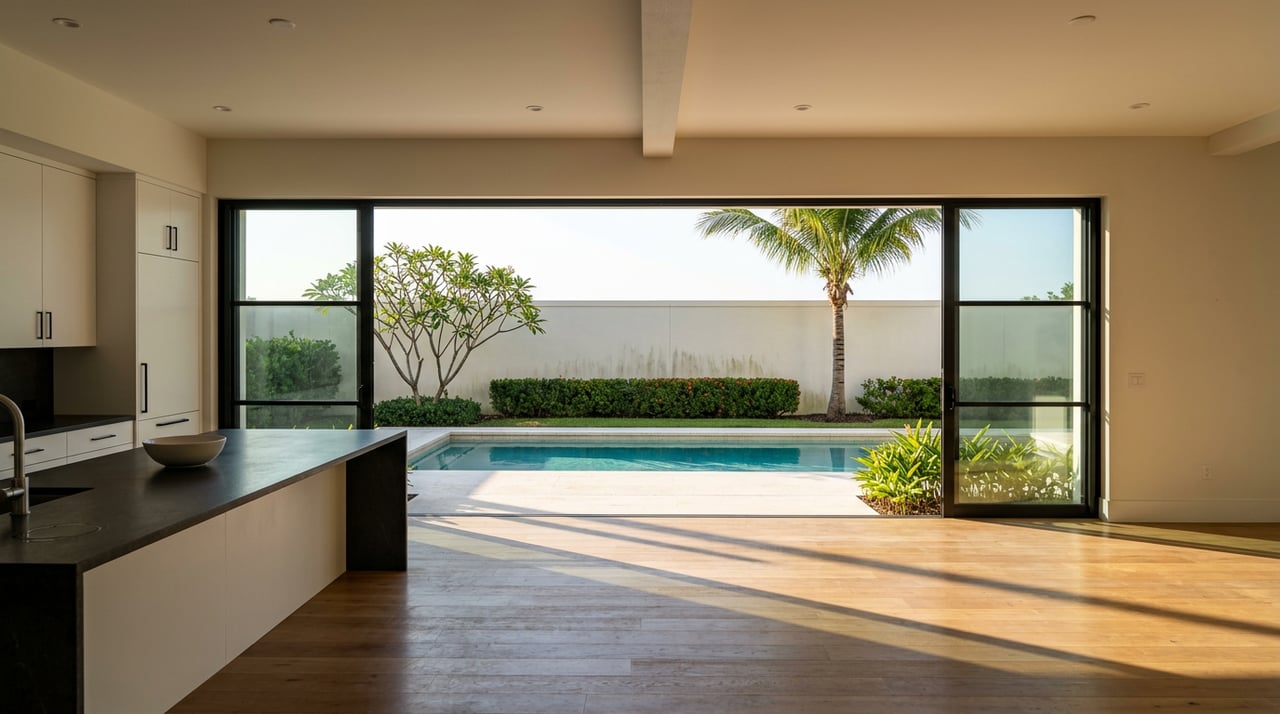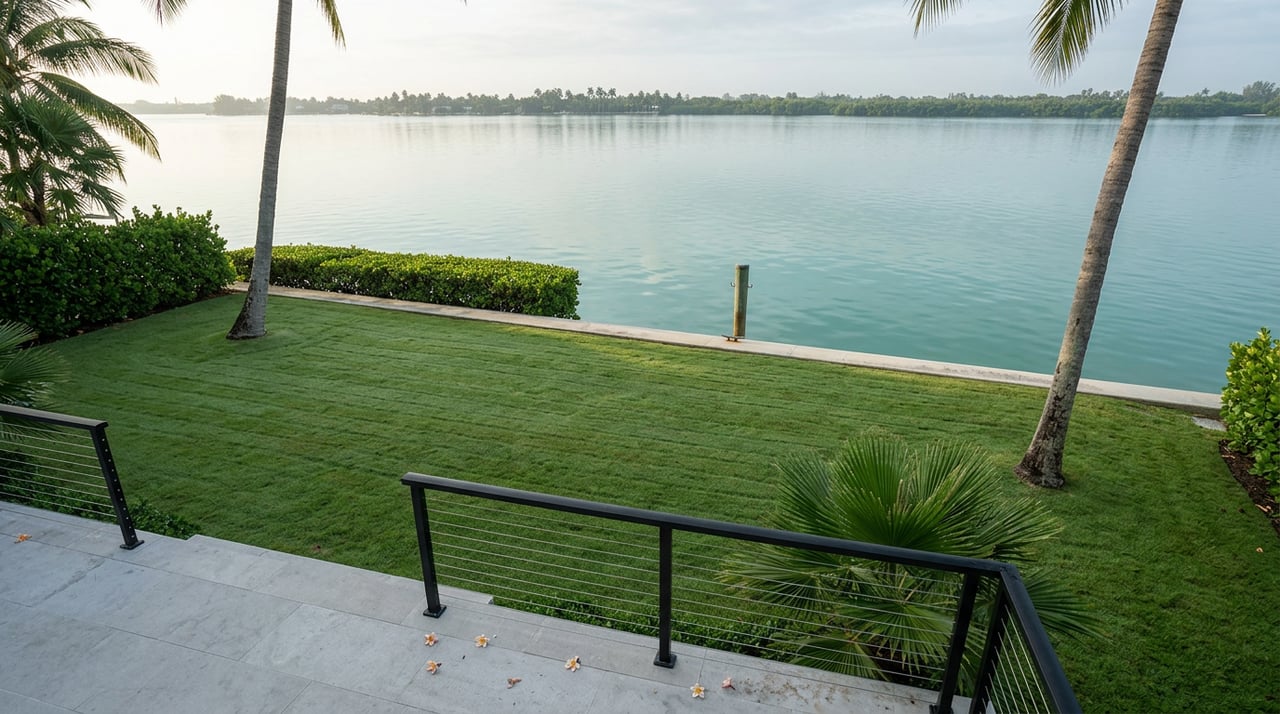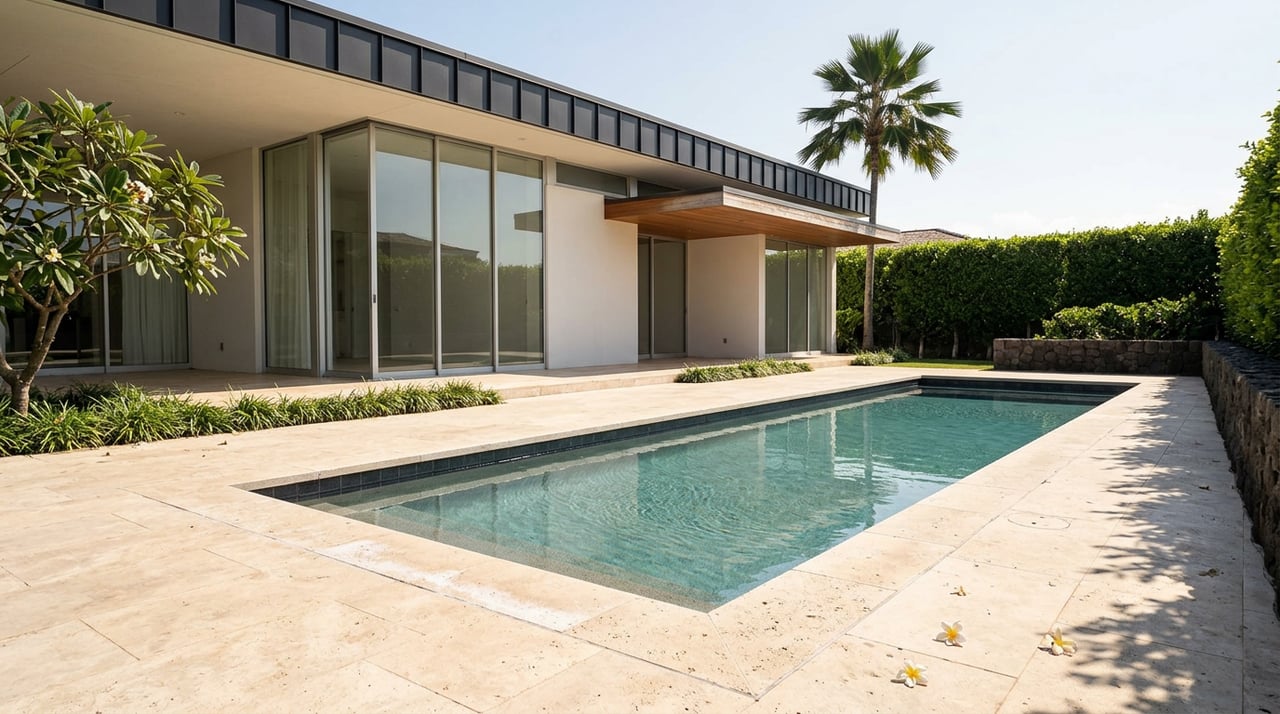
In 1999, someone bought a beachfront lot on Kahala Avenue for $3.8 million. By 2022 it was listed at $14.2 million. It sold in 2024 for $9 million to Alan Richter and Mary Widel, a gap of more than five million dollars between ask and close on one of the most sought-after streets in Honolulu. Then in March 2026, the new owners got a letter from the state. The Department of Land and Natural Resources had inspected the shoreline in January and found vegetation, debris, and dead palm stumps encroaching into the public beach transit corridor, the same kind of encroachment the property's prior owner had been cited for in 2015, 2018, and 2021.
That sale is the clearest evidence available right now of something Kahala Avenue's reputation as Honolulu's most exclusive address tends to obscure: the state's shoreline enforcement is no longer a background risk you disclose and move past. It is starting to show up in what buyers are actually willing to pay. If you are on either side of an oceanfront transaction on this street in 2026, the DLNR file matters as much as the square footage.
What the February Notices Actually Found
Earlier this year, DLNR sent notices to at least eight beachfront property owners along Kahala Avenue, and flagged several more adjacent owners, some of whom live in Singapore, Japan, and California, as having similar obstructions on estates and vacant lots worth close to or more than $10 million apiece. The notices went out between February and May 2026, and they describe a familiar list: pool walls, fencing, concrete rubble, stairs, irrigation pipe, and vegetation, all pushed into the public beach as the shoreline has moved inland.
Three of the addressed properties show how differently that enforcement plays out depending on who owns the lot and how long they have owned it.
| Address | Owner | Enforcement history | 2026 status |
|---|---|---|---|
| 4615 Kahala Ave | Alan Richter and Mary Widel (bought 2024) | Prior owner cited in 2015, 2018, and 2021 | New March 2026 notice for vegetation and debris in the beach corridor; owners hired EA Engineering Science & Technology to design a vegetated sand dune |
| 4623 Kahala Ave | Asagami Corp (owned since 1989) | DLNR contact dating to 2005; a 2024 notice of violation threatened up to $100,000 plus $10,000 a day | Debris cleared, but a pool encroachment flagged in 2024 remains unresolved as of the 2026 notice |
| Vacant lot near 4607 Kahala Ave | An Alexander & Baldwin affiliate | Notices in 2018, 2019, and 2021 | Fence removed and reset farther back in 2026, but concrete rubble and exposed piping remain; the lot is listed for sale at $15 million |
Coastal engineer Mike Foley, who is working on the 4615 dune project, put the trajectory plainly to the Honolulu Star-Advertiser: it is only a matter of time before Kahala sees what has already happened on the North Shore, where homes have collapsed into the ocean.
The Penalty on Paper Doesn't Match the Property Values
The 2026 notices carry potential fines of up to $15,000 a day for owners who don't correct the violations. That sounds significant until you look at how slowly these cases actually move. DLNR's contact with Asagami Corp over the 4623 Kahala Ave property goes back to August 2005, a span that in 2024 drew a pointed reaction from state Sen. Lorraine Inouye when she was told officials had been corresponding with the company for close to 19 years, a timeline that has only grown since.
A Star-Advertiser Island Voices column published in July 2026 made the underlying math explicit: when DLNR's penalty authority tops out at $15,000 a day and still isn't enough to compel compliance from owners of eight- and nine-figure estates, the deterrent isn't working, and the cost of enforcement gets absorbed by the public instead.
The North Shore offers a preview of what happens when fines do get pursued seriously. Homeowners at Rocky Point were fined a total of $948,000 for unauthorized shoreline armoring, a case built from years of accumulating daily penalties rather than a single citation. For a buyer, the lesson isn't that the fines are trivial. It's that a small fine on paper today can represent a much larger unresolved liability that transfers with the property at closing, and that liability doesn't show up by asking whether the seawall looks intact.
The Setback Line Moved While You Were Looking at the View
Even properties with no open violation are operating under different rules than they were two years ago. Honolulu's Ordinance 23-3, adopted in 2024, raised the minimum shoreline setback from 40 feet to 60 feet in most urban zones, and up to 100 or 130 feet in areas the city now classifies as higher erosion risk. The setback is no longer a fixed line on a map. It's calculated from an erosion-rate formula, which means the buildable envelope on a given lot can shrink again as new shoreline data comes in.
The renovation math matters just as much as the setback itself. Under the county's existing rule, repairs or improvements that exceed half of a structure's replacement cost over a rolling ten-year period trigger full compliance with the current setback, not the one in place when the house was built. On an older Kahala Avenue estate, that means a serious remodel or a rebuild after storm damage may have to sit much farther back from the water than the original footprint, shrinking the usable oceanfront lawn that is part of what buyers are paying for in the first place. A licensed surveyor can tell you exactly where that line falls on a specific lot, and on this street in 2026, that survey is no longer optional homework.
What the Neighborhood Median Doesn't Tell You
Luxury sales above $2 million stayed strong across Kailua, Lanikai, Kahala, Diamond Head, and Hawaii Loa Ridge in the second quarter of 2026, with a combined median luxury price near $2.95 million for that group. That number describes a wide band of East Honolulu neighborhoods, not Kahala Avenue specifically, and it definitely doesn't describe true oceanfront property. The broader Waialae-Kahala district, which includes interior streets alongside the beachfront, carried a median single-family price closer to $2.575 million through 2025, according to Honolulu Board of Realtors figures. True beachfront lots on Kahala Avenue are a much smaller, separate universe, typically trading between $5 million and $25 million depending on lot size and direct beach access, and there are only a few dozen properties on the island that qualify.
Earlier in 2026, the luxury segment that includes Kahala also got noticeably more selective. The median sale price for Oahu luxury single-family homes fell 17.6 percent month over month to $2,365,000 in April 2026, even as homes sold faster and price per square foot rose from $1,082.20 to $1,167.03. Nearly 42 percent of April's luxury sales involved a price reduction. Buyers were still paying up for the right property. They were pulling back hard on anything carrying unresolved risk, and a shoreline compliance file is exactly the kind of risk that doesn't show up until diligence starts.
What This Means If You're Buying or Selling on Kahala Avenue
If you're selling, the DLNR and DPP enforcement history on a specific address is now a discoverable fact, not a private matter between the state and the owner. Getting ahead of it before a listing goes live, whether that means completing corrective work, commissioning a current certified shoreline survey, or simply having documentation ready, changes the conversation with a serious buyer. No amount of staging changes what a buyer's attorney finds when they pull the file.
If you're buying, ask for the property's OCCL and DPP violation history as part of due diligence, the same way you'd ask for a termite report. A seawall that has been there for decades isn't automatically legal. Some were permitted under conditions that expired years ago, or under a shoreline location that has since moved. Factor the cost of a possible dune restoration or setback compliance project into your offer, not into a surprise after closing.
Kahala Avenue is not becoming a bad investment. It remains one of the few places on Oahu where large oceanfront lots still exist at all, and that scarcity isn't going away. What's changing is which risks are priced in and which ones still catch people off guard, and in 2026, the shoreline file has moved from the second category into the first.
Frequently Asked Questions
Does this enforcement affect all of Kahala, or just Kahala Avenue? The DLNR and DPP actions described here apply to oceanfront lots that directly front the state conservation district and the public beach transit corridor. Interior Kahala streets aren't subject to these specific shoreline rules, though buyers across the broader Waialae-Kahala market are increasingly asking about it.
If a seawall is already there, is it automatically legal? Not necessarily. Some structures were permitted decades ago under temporary or conditional authorizations that have since expired, or the shoreline itself has moved landward past where the structure was originally approved. A current certified shoreline survey is the only reliable way to confirm status.
What exactly is a certified shoreline survey? It's a survey performed by a registered land surveyor and certified through the state process that establishes the legal shoreline boundary on a specific lot. That boundary determines both what's buildable today and whether any existing structures already sit inside the regulated setback area.
Buying or selling an oceanfront estate on Kahala Avenue takes more than a good photographer and a clean lawn. It takes someone who reads the compliance file the same way they read the comps. The Oahuist has spent years pairing List Sotheby's International Realty's global reach with the kind of ground-level knowledge this street now requires. If you're weighing a move on Kahala Avenue, schedule a consultation and let's look at the whole picture together, with aloha.