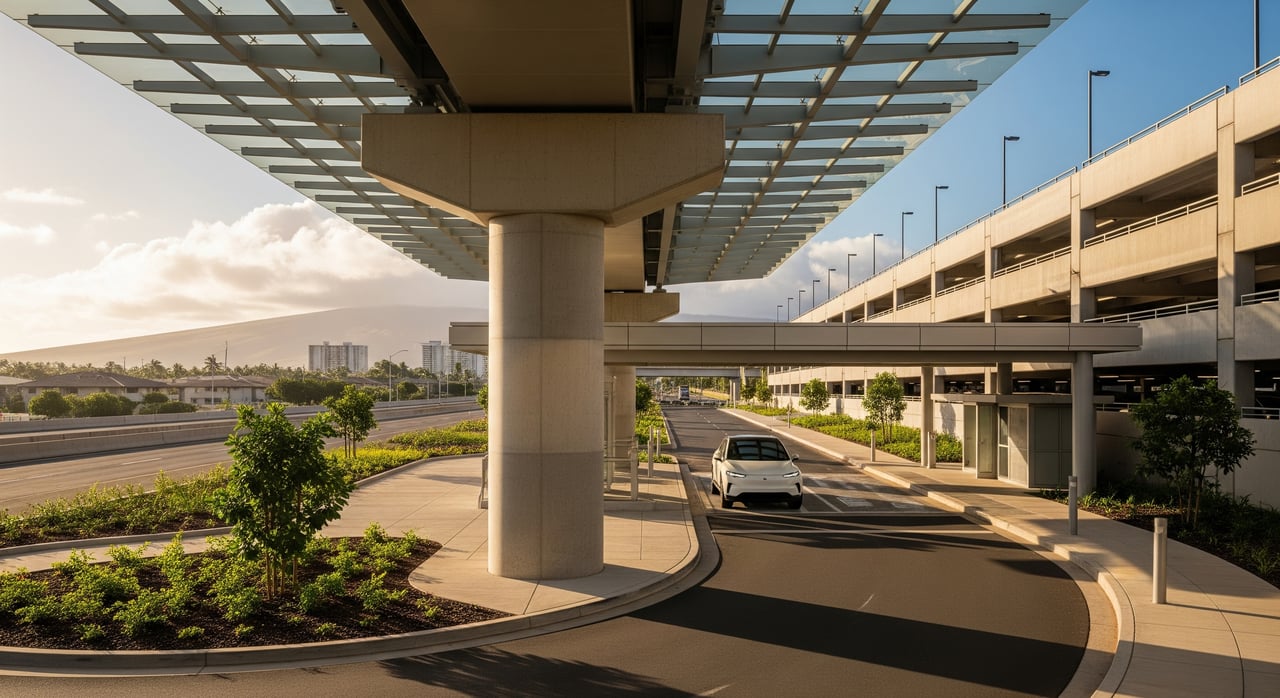
Thinking about living in Kapolei but not sure how the daily commute will feel? You’re smart to ask. On Oʻahu, the difference between a smooth morning and a stressful one often comes down to timing, route, and parking. In this guide, you’ll learn how Skyline rail, H‑1 driving, and park‑and‑ride work from Kapolei, plus a simple way to test your door‑to‑door time before you move. Let’s dive in.
How Kapolei commuters move
Kapolei gives you several ways to reach Honolulu job centers. Your main options are Skyline rail, driving the H‑1 Freeway, and bus or employer shuttle. Many residents mix modes, like parking at a station and riding rail for the most congested segment.
As you compare, focus on four things: reliability, cost, flexibility, and first/last‑mile logistics. Your best choice may shift by season, work schedule, or even by day of the week.
Skyline rail basics for Kapolei
Skyline is Honolulu’s rail system designed to connect West Oʻahu with urban Honolulu as segments open. For Kapolei residents, the value is skipping the most congested stretch into town while enjoying predictable travel on a fixed guideway.
Before you rely on rail, confirm the following:
- Which stations near Kapolei are currently open and closest to your home.
- Service hours for your shift, including first and last trains.
- Peak and off‑peak train frequency and typical transfer times if you connect to bus.
- Park‑and‑ride locations, capacities, operating rules, and whether lots fill early.
- Fare options, day and monthly passes, and any employer transit benefits.
- Last‑mile options at the town end, such as employer shuttles, bikeshare, or short rideshare hops.
Who it fits: If your workday is close to typical office hours, you prefer predictable timing, and your origin and destination are near stations or supported by shuttles, Skyline can reduce stress. If you work very early, late, or overnight, confirm service span and frequency for your exact shift.
Driving H‑1 from Kapolei
H‑1 Eastbound is the main route from Kapolei into Honolulu. Traffic is time‑sensitive and can vary day to day. Typical windows to plan around are:
- AM peak: 6:00–9:00 a.m.
- Midday: 9:00 a.m.–3:00 p.m.
- PM peak: 3:00–7:00 p.m.
- Weekends: event‑dependent, especially near shopping and sports venues.
Common choke points include Kapolei on‑ramps, the Fort Weaver Road and Waipahu interchanges, the Pearlridge/Aiea area, and merges approaching Honolulu. Incidents, construction, and special events can spike delays beyond normal ranges.
How to estimate your time:
- Pick your target arrival and departure windows. Sample multiple weekdays.
- Use your preferred map app to check live and predicted drive times from your Kapolei neighborhood to your workplace. Note low, typical, and high values.
- Repeat for a week to see variability. Keep a quick log so you can compare modes side by side.
Park‑and‑ride and parking realities
Park‑and‑ride in Kapolei works well when you can reach the station quickly and find a space. Confirm whether lots are first‑come or permit‑based, posted hours, overnight rules, and security. If lots fill early, consider drop‑off, carpool, bike, or rideshare.
Downtown and Ala Moana parking is a mix of metered street spaces, private garages, and employer lots. Monthly permits are common but can be expensive and may have waitlists. If your employer covers parking or offers a stipend, factor that into your cost comparison.
At the airport, employee parking policies differ from traveler parking. Many workers use employer lots or shuttles. For military installations such as JBPHH, access controls and base‑specific parking rules apply. Confirm gate hours, ID requirements, and any shuttle options well ahead of time.
Cost notes: Compare monthly parking plus fuel against a monthly transit pass plus first/last‑mile costs. Pre‑tax transit benefits can shift the math if your employer offers them.
Common destinations: what to expect
Downtown Honolulu (CBD)
- Drive: Morning arrivals sit squarely in the AM peak, with reliability sensitive to incidents near Aiea and urban merges. Midday is usually lighter, PM return is busy.
- Rail: Often competitive for predictability if your office is near a bus or walk connection from the town‑end stations. Expect a short last‑mile link to most offices.
- Bus/express bus: Can be efficient if it uses HOV or priority lanes, depending on your stop locations.
- Who it suits: Office schedules, meetings near civic buildings, and anyone without employer‑paid parking.
- Cost pointers: Downtown garage permits can add up. A pass plus occasional rideshare for the last mile can be cheaper.
Ala Moana/Kakaʻako
- Drive: Congestion rises near Kakaʻako corridors, retail hubs, and construction zones. Weekend shopping can slow access.
- Rail: Check how close the current terminus gets you and whether a bus or micromobility hop bridges the gap.
- Bus/express bus: Useful if your stop is close to your building.
- Who it suits: Retail, medical, and creative office workers with regular hours.
- Cost pointers: Many buildings use private garages with variable rates. Confirm monthly availability early.
Daniel K. Inouye International Airport
- Drive: Midday can be smoother than peak, but arrivals and lane closures can affect flow near the airport area.
- Rail: Evaluate how the current alignment and bus links serve your terminal or employer campus.
- Bus/employer shuttles: Often practical for on‑airport or nearby employers.
- Who it suits: Employees with shift flexibility or employer shuttles.
- Cost pointers: Employer parking and shuttles can change the equation significantly.
Pearl Harbor/JBPHH/Aiea
- Drive: Gate queues and H‑1 bottlenecks near Aiea can be the deciding factor. Allow buffer on inspection days or after long weekends.
- Rail: If the alignment and connections match your duty station, rail can avoid freeway slowdowns. Confirm base shuttle options.
- Bus/vanpool: Many military commuters use organized options. Check base programs.
- Who it suits: Those with predictable shifts and clear base access plans.
- Cost pointers: Employer parking is common, but time lost at gates can outweigh savings if your schedule is tight.
UH West Oʻahu and West Oʻahu employers
- Drive: Shorter, more predictable trips within West Oʻahu, especially outside school start and end times.
- Rail/bus: Useful for students and staff with schedules aligned to service frequency.
- Who it suits: Residents who live, study, and work on the west side.
- Cost pointers: Local trips can favor driving or biking over monthly transit passes.
How to test your commute like a local
Use this quick, practical framework to compare apples to apples.
- Define your windows: Choose realistic arrival and departure times, plus a late‑start and early‑leave day.
- Sample five days: For each day, log door‑to‑door drive times and note where delays happen.
- Test rail: Time the trip from your door to the station, average platform wait, in‑vehicle ride, and last‑mile to your building. Repeat for your exact schedule.
- Add a park‑and‑ride trial: Drive to the station at your planned time. Track parking availability and the walk to the platform.
- Compare costs: Fuel, parking or permits, fares or passes, plus first/last‑mile costs. Include employer benefits.
- Stress‑test: Try one trip during rain or after a traffic alert. Variability matters.
Tip: Keep a simple one‑page log with low, typical, and high times. The most reliable option for your schedule usually wins, even if it is not the absolute fastest once in a while.
Relocating to Kapolei? We can help
Every commute is personal. Your best route depends on your exact neighborhood, schedule, and parking or shuttle options at work. If you want a tailored plan, our team will map travel windows, test first/last‑mile links, and fold commute realities into your home search so you choose with confidence.
Reach out to Bridget Townsend for a no‑pressure consultation. We’re here to help you find the right home and the right daily rhythm, with aloha.
FAQs
Is Skyline rail faster than driving from Kapolei during rush hour?
- It depends on your shift, station proximity, and last‑mile link. Rail avoids H‑1 congestion, but transfers and first/last‑mile time can balance out. Test both options for your windows.
What time does H‑1 eastbound from Kapolei get busy in the morning?
- You’ll see the heaviest flow between 6:00 and 9:00 a.m., with day‑to‑day variation from incidents, weather, and lane work. Sample your exact arrival time for a week.
Are there park‑and‑ride options near Kapolei stations?
- Yes, but availability, capacity, and rules vary by location. Confirm whether lots are first‑come or permit‑based and if they fill early on weekdays.
How much does parking cost in Downtown Honolulu?
- Rates vary by garage and location, and monthly permits can be expensive with possible waitlists. Ask your employer about stipends or pre‑tax benefits before you decide.
What if I work very early or late shifts?
- Off‑peak driving can be faster, but always confirm rail service hours and frequency for your specific schedule. Check station security and parking rules if you arrive before dawn or after dark.
Can I combine biking or rideshare with Skyline to save time?
- Yes. Many riders bike to stations or use a short rideshare for the last mile in town. Confirm bike storage rules and pickup zones at stations.
How do I compare monthly commute costs fairly?
- Add up fuel and parking or permits for driving. For rail, total your pass plus first/last‑mile costs. Include any employer benefits so you can compare true monthly totals.